The Haller Foundation 2004 -2006
Go to current website: http://haller.org.uk/
For several years this was the website for the Haller Foundation.
Content is from the site's 2004 -2006 archived pages.
If you were searching for the Haller Foundation and ended up here please go to their The current website found at: http://haller.org.uk/
The Haller Foundation is a new charity. Founded in 2004 we are registered in the UK, but work at the grass roots level with individuals and communities in townships and rural areas in Kenya. Its goals are to help individuals and families break out of the poverty trap. By providing education and training in sustainable agriculture, and community based wildlife and conservation initiatives, The Haller Foundation offers Africans the skills to become self sufficient, and by supporting small scale enterprises, the potential to become 'barefoot entrepreneurs'
Working in partnership with The Baobab Trust, a Kenyan NGO, we use Dr Rene Haller's expertise in the regeneration of degraded landscapes such as The Haller park in Mombasa , to provide an innovative , and economically viable approach to our projects.
|
OUR APPROACH
|
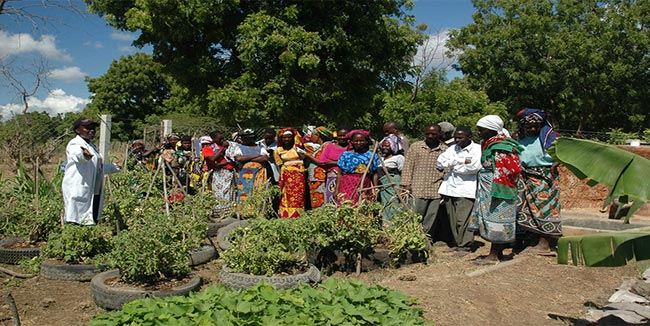
One module of the farmers field school training - how to use discarded tyres to grow cash crops when land is in short supply. After training this woman's collective set up a tree nursery selling seedlings and young plants. Community kiln for the production of jiko mbili - one stick cooking pots - enviromentally friendly with very little wood needed for cooking. Jiko mbili - unique energy efficient cooking pots sold by a community enterprise
Louise Piper talks about why the Haller Foundation was set up.
"The idea of setting up the Haller Foundation came in 2002, after visiting Dr. Rene Haller in Kenya. I knew of his work through his son Guido Haller - a colleague, and friend, in the investment banking world. After twenty years in the industry, I felt it was time for a change. Guido persuaded me to go to Kenya and see the unique and fascinating project his father has led for the last forty years.
"Rene's story, of transforming the bare rocky ground from open limestone quarries, into a landscape of forests, lakes, wetlands and savannah, fascinated me. My challenge became clear. Very simply - how could I help to keep this legacy going and perhaps even replicate it in other places? The idea of setting up a fund raising organisation came into being.
"Rene had already set up the Baobab Trust, a Kenyan charity involved in education and training, sustainable agriculture and wildlife conservation. I am a trustee of the Baobab Trust - but also believed that an internationally registered foundation would be able to help in fund raising and communicating the Haller principles and values to a wide audience.
"My first step was to start pulling together some Trustees to help me get the project going. Rene, suggested Julia Hailes, who had spent some time working with him in the mid 1990s. She was immensely enthusiastic and her knowledge and experience in the environmental world have been in-valuable. There are now seven trustees on the board including our latest recruit, Ian Davies. He is an international expert in sustainable development, working for English Nature and responsible for setting up the largest landscape restoration project in Europe - the Cornish Heathland Rehabilitation Project.
"The Trustees have been integral to setting the objectives and governance of the Haller Foundation. Each trustee has an individual area of responsibility and will lead different projects from initiation to implementation and monitoring. We will be seeking patronage from appropriate individuals as the foundation becomes established
OUR LOGO

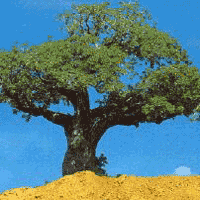
A colleague in the banking world asked me 'why we had a worm as our logo!' We felt that of all the players in the ecological miracle that lay behind the transformation of the quarries, the millipede played a hugely significant role. They feed on the Casuarina needles which are the only tree species able to thrive in the harsh barren landscape of the limestone quarries.. The droppings of the millipedes and the introduction of compost bacteria convert to humus and this was the start of Dr. Rene Haller's man-made eco-system experiment.
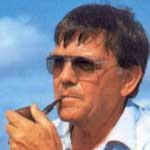
Dr Rene Haller
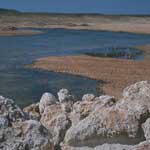
The Bamburi quarry in 1976
Dr. Rene Haller is a Swiss naturalist. He trained in horticulture, landscaping and tropical agronomy and first came to Africa in 1956 to manage a coffee plantation in Tanzania. Three years later he joined Bamburi Cement Company to establish a garden department capable of producing enough food for the factory employees. In the early 1970's the Bamburi Cement Company gave Rene Haller the mandate to try to restore the scarred landscapes left by the limestone quarrying used in the manufacture of cement. Using an entirely sustainable approach, 250hectares (almost 7 sq Km) of quarried land which was completely inhospitable, and which would have taken hundreds of years to regenerate, have been restored.
"Crazy Swiss chap planting trees on rock."
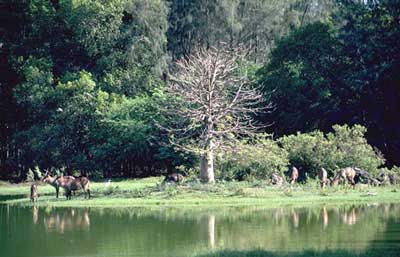
The Haller Park today
The quarries are now an inter-linked combination of lakes, wetlands and savannah grasslands, with walking and cycling trails, as well as a Nature Park and Wildlife Sanctuary. The area has been renamed The Haller Park and demonstrates how degraded landscapes can be restored and become an asset for visitors and local communities alike. Close to Mombasa, Kenya's second largest city the park attracts 100,000 visitors and local residents each year.
Not only is the park stunning visually, it has become an educational showcase on the possibilities of restoration. Part of the Dr Haller approach is that 'ecology and economy have to be self sustaining'. He set about persuading local communities that sustainable land use was viable by introducing many income generating initiatives. The park has over forty different income sources from bee-keeping, tree planting, nurseries, fish farming and an integrated aqua-culture system and many other sustainable agriculture and wildlife utilization practices . The Park is also unique as it contains a reservoir of endangered species (over 30 from the IUCN's endangered species list ) but also 180 species of indigenous trees, 30 species of mammals, 160 species of birds, butterflies and reptiles. With an educational pavilion, and trained guides to explain the history and development of the park it is an educational asset for school and universities both in Kenya and abroad.
Scenes in The Haller Park today
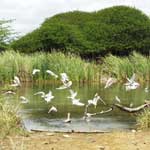
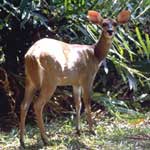
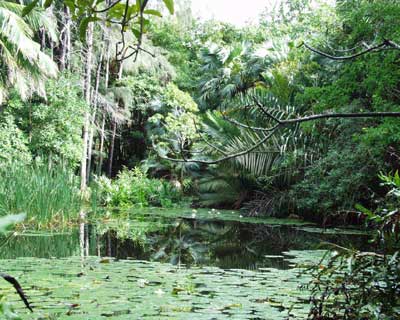
Although now retired from the Bamburi Cement Company, Dr Haller remains involved as a scientific advisor for ongoing restoration. The Haller Park is now managed by Lafarge Eco Systems www.lafargeecosystems.com
In 1991 he set up the Baobab Trust www.thebaobabtrust.com a Kenyan based NGO to further his work in the field of sustainable agriculture and conservation, focusing on providing education and training to enable communities to be able to provide a stable and long term source of food. The Trust is now the main vehicle for Dr. Rene Haller's activities and will be one of the beneficiaries of funds raised by the Haller Foundation with whom it will partner on some projects.
Over his lifetime he has received a number of international accolades and awards for his environmental work
- In 1987 Dr. Haller was awarded the prestigious Global 500 Roll of Honour by the United Nations, for his 'outstanding environmental achievements'.
- 1991 the Swiss Brandenberger prize, as well as an Honorary Doctor's degree from the University of Basle.
- In April 2003, he was appointed to the board of the Kenyan Wildlife service and in 2004 acted as interim Chairman between for 6 months
- The SKAL international award for the development of eco-tourism in Kenya.
~~~
AN ASIDE: I first learned about the Heller Park when I was on a two month long extended tour of many of Kenya’s national parks and reserves. It's the quality of Kenya's parks and reserves that make Kenya the most popular safari destination in Africa. The best known reserves are Masai Mara Reserve, Amboseli National Park, Tsavo National Park , Lewa Wildlife Conservancy, Nairobi National Park, Samburu, Shaba and Buffalo Springs National Reserves, and the Lake Nakuru National Park. Our group visited the Heller Park, since a member of the group was part of the Heller Foundation and wanted us to see the result of Dr. Haller’s vision. The park is home to a million trees, monkeys, birds and insects. Also found there are thirty species identified by the International Union for the Conservation of Nature (IUCN) as endangered flora and fauna. Now some folks may be disappointed when they visit the park since it lacks the majesty and expanse of the larger nature reserves, but that is missing the point. This is a park. I found the park’s history fascinating.
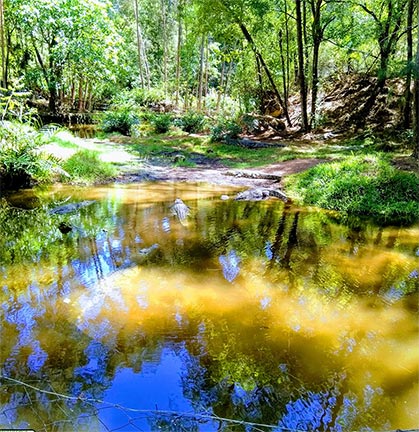
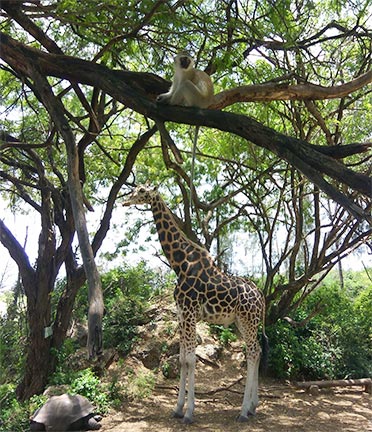
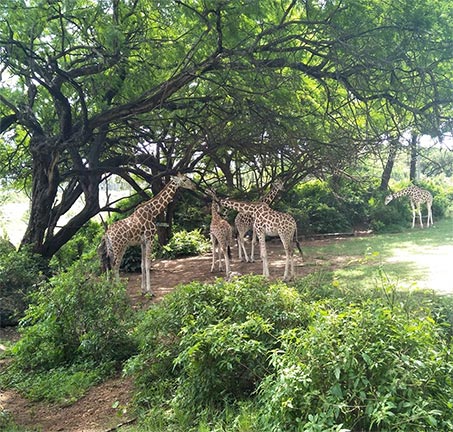
We had a pleasant evening and J & T were so impressed with my Kenya travels that they have decided to start planning a safari excursion to Kenya. If you are on the Kenya coast in the Bamburi, Mombasa area, I encourage you to make a day trip to the park. I told them. And also look up the Heller Foundation, they are doing some great things for Sub-Saharan Africa.
~~~
PROJECTS
The Haller Foundation has chosen its first three projects to support in Kenya:
Farmer Field School Training Programmes
Following a highly successful 18-month pilot programme we are now seeking funding to establish long term permanent demonstration farms where field school programmes can be held.
These are run for small scale farmers, women in the community, and displaced industrial workers who wish to learn and practise new small scale agriculture. The aim of the programmes are to demonstrate sustainable land use techniques which enable them to become self sufficient without damaging the environment. This is for many their first step up the economic ladder, being able to grow enough food for their own use and to sell. Using the principle 'seeing is believing' participants are given hands on teaching at an organic demonstration farm.
Training is offered in three day courses covering
-
The use of low cost alternative technologies in sustainable agriculture with many ideas pioneered and tested during the thirty years Dr Haller worked on the regeneration of the Bamburi Quarries
-
The principles of organic farming
-
Integrated fish/irrigation systems
-
Water conservation and well management
-
Tree planting and bee keeping
-
Livestock husbandry with animal leasing opportunities
-
Integrated crop production
All sessions include a module on family planning and HIV awareness.
The Haller Foundation is seeking funding to establish an environmental education centre at the entrance to Nguuni Nature Sanctuary. This is a stunning nature reserve and one of Rene Haller's flagship bio-diversity restorations. It is home to many species of indigenous trees, animals, butterflies, birds and insects and currently offers bird watching tours, walking safaris and nature trails. It is also the only place where the successful practise of the domestication and utilisation of Eland and Oryx can be observed. However with increasing pressure on land-use around Mombasa, Kenya's second largest city the sanctuary has become surrounded by shanty town whose 30,000 inhabitants live in appalling conditions in desperate poverty. The Haller Foundation is raising funds for an environmental education centre which would be an invaluable asset for this community.
The project has been established in consultation with the residents of this shanty town and will offer some tremendous facilities. It will contain a children's reference library - since the 50 schools which surround Nguuni have very little in the way of books and basic materials. The centre will provide both residents and visitors the opportunity for education and training, will allow them to see and participate in film screenings, and displays and talks on local environmental issues. Once established the centre will provide employment and a livelihood for many of the adult residents of the shanty town who will be able to run environmental and cultural projects from there.
Just outside the sanctuary there will be opportunities for residents from the surrounding areas to build units for the production of craft, woodwork, educational and cultural workshops and other activities from which they can create items for sale. We are seeking funding to work with local residents to transform the area outside the sanctuary by building covered walkways and paths leading to the park. This will encourage accessibility to the sanctuary and help local residents to earn a livelihood by capitalising on tourism, building collective enterprises and trading opportunities.
Mining Landscape Restoration Project
The third project the Haller Foundation has selected is to encourage best practises in mining rehabilitation and environmental restoration. Mining is an important industry, capable of meeting society's needs, creating substantial wealth and social progress. Sadly in many cases the true costs are very great, and unsustainable. The resulting mining legacy, the adverse environmental, social and economic impacts of poor sustainable development practices is a very global issue and very relevant to Kenya and equatorial East Africa.
Good practices of responsible mining activity such as at Bamburi are leading the way by showing how past legacy can be restored. The Haller foundation is working with industry and with key partners to promote rehabilitation best practices using the Bamburi rehabilitation project to showcase what can be achieved. The foundation aims to identify and asses the impact of existing and potential legacy sites across Kenya. This baseline is a key starting point for an educational campaign and practical action to get good practice post-mining regeneration and environmental restoration in place in Kenya. To achieve this we will work with partners from all sectors of society including industry, government and local communities.
The Bamburi Rehabilitation Project
Taken from
Haller, R.D. Transformation of Wasteland into a self-sustaining Forest and Wetland Ecosystem -
Background
The Bamburi Cement Factory was initially built by Cementia Holding, Zurich. In 1990 Lafarge, Paris, became the majority share holder of Cementia Holding, and became one of the major shareholders with Blue Circle Industries. With the take-over of Blue Circle by Lafarge, Lafarge owns 73% of Bamburi Cement Ltd. Quarrying began in 1954 and continues to day.
Dr Haller was given the mandate to begin rehabilitation in 1970.With the view that the limestone quarry had to be economically self-sustaining, two main projects were undertaken: 1. a forestry project with the long-term vision to re-create a diverse, ecologically as well as economically self-sustaining indigenous coastal forest ; and 2. an aquaculture project, aiming at short-term economical return through fish sales.
Introduction
The transformed Bamburi Cement coral limestone quarry runs for 7km parallel to the Indian Ocean, starting 8km north of Mombasa Island in Kenya. An area of 300ha of Pleistocene coral limestone have been mined and burnt to cement, leaving behind a wasteland of splintered coral rock. (A deposit of Jurassic sediments a few kilometres inland provides shale.) The excavation extends 10m downwards to the slightly saline groundwater. The groundwater is connected to the ocean through the porous coral rock. Its levels fluctuate slightly with the sea tides. As the ground water evaporates from the bare quarry floor salt crystallizes on the surface, making for an inhospitable environment for any living creature.
"Secondary bush-land" covered the area before the quarrying activity began. This had a low biodiversity and was of a low ecological value. It was largely unproductive, as the vegetation was mostly unpalatable for domestic livestock and the bush-land was heavily infested with tsetse flies, the transmitters of the lethal nagana disease (trypanosomiasis) in domestic ruminants.
In 1971 the rehabilitation of the quarry commenced with experiments on a trial and error basis, to find the right tree species to re-colonise the area. This was followed by a systematic search for the best methods to transform the quarry into an ecologically and economically self-sustaining forest and wetland system. Dr Haller decided at the outset to rehabilitate the quarry naturally, avoiding pesticides and mineral fertilizers in the belief that if this was successful, then the approach could be adopted more broadly as a model for landscape regeneration which could be adopted by local communities who may not have access to fertilisers and pesticides.
Methodology
The Forest System - As there was not sufficient soil available for a conventional greening of the quarry, a pioneer tree had to be found which would grow in the limestone rubble without humus, be tolerant of salinity, and produce large amounts of leaf litter for humus formation. Also, its commercial value for firewood and timber had to be considered. The Casuarina equisetifolia was selected. It grows on the sand dunes close to the Indian Ocean shoreline. The Casuarinas are evergreen trees which constantly drop and renew their foliage. The leaves are reduced to tiny tips and the green needle-like photosynthesizing branchlets are well protected against water loss through evaporation. With the help of symbiotic micro-organisms the Casuarina can fix atmospheric nitrogen and dissolve other nutrients from the rocky substrate. Casuarina trees grow very fast and can reach 2 metres within six months, providing enough shade to reduce evaporation and salt crystallization. Falling "needles" accumulate densely under the trees. Their high tannin content inhibits normal decomposition by micro-organisms. Indigenous red-legged millipedes, Epibolus pulchripes, were introduced. Their main diet is leaf litter and they experienced no problem with the tannin. Once Casuarina "needles" have passed through the millipedes' guts micro-organisms can convert their droppings into humus. All animals required for humus production were introduced from the remaining forest and bush-land along the Kenya Coast.
With humus available other vegetation could be established. When selecting the species for the second generation of trees, there were three main criteria. Trees of a potential economic value were sought, as the forest has to be self-sustainable economically as well as ecologically. A second criterion is the "biodiversity value" of the plants as food or habitat for other organisms, from fungi, epiphytic plants to a variety of animals, from small invertebrates to butterflies and mammals. The third criterion is the plant's conservation status. Of the plant species introduced so far, 18 are classified as rare, endangered or vulnerable in the IUCN (International Union for the Conservation of Nature) Red List of Threatened Plants (1997).
Over the years invertebrates, mammals and birds in large numbers have been attracted by the new habitats and feeding niches. The animals missing for the right predator and prey relation were collected and introduced. It was important to increase the plant and animal diversity as fast as possible, to create a stable system.
Wetland and Water System Small lakes, ponds and swamps were excavated and habitats for fish, birds and reptiles created. Rock groups and islands were established. Wherever possible water bodies and swamps were inter-connected by channels for the free movement of aquatic organisms. In a larger lake hippopotami were introduced to keep the water-body healthy and prevent it from silting, as well as to accelerate fish production for the commercial integrated aquaculture system. Fish, crocodile and rice production are an important part of the established wetlands. Tilapia fish are marketed locally. Crocodiles are grown on waste meat from the farm and surrounding slaughterhouses to produce meat for the local market and skins for the overseas market.
Results
After a few years a layer of humus, 10-25cm thick has developed on the quarry floor. 320 indigenous trees and shrub species from the coastal forest have been established. More than 180 species of fungi have been collected, though most of them not yet identified. Birds, bats and monkeys are constantly introducing new plant species. The original Casuarina forest is slowly being replaced by a variety of broad-leaved trees. Over the past 15 years over 2 million trees have been planted in the quarries, among them several valuable hardwood timber trees and several rare and endangered species. 30 mammal species have found food and shelter in the new sanctuary. 260 bird species were identified in and around the rehabilitation area and 30 species of butterflies. Other groups of organisms have not yet been surveyed.
Herds of eland and oryx antelopes have been introduced to utilize the agriculturally unproductive reserve land of the cement factory, and to act as seed dispersers from the original bush- and grassland into the disused, open quarries.
The former quarry, known today as the Bamburi Quarry Nature Park, is now a major environmental education centre for Kenya, and was visited by over 130,000 people in 2004. Used by students and schools from all over the country as a showcase for environmental rehabiliation, it is also a prime attraction for local communities It is one of the few green areas around Mombasa that they can escape to from the city - and enjoy some of the recreational and educational facilities on offer. Dr Haller is now retired, and the Park is now managed by Lafarge Ecosystems. See www.lafargeecosystems.com.
Conclusions
The project is now ecologically and economically self-sustaining. The successful long-term experiment has proved that the rehabilitation of a man-made wasteland on sound organic principles is viable. A business, like the cement industry, can leave behind an ecologically more valuable ecosystem than the one it originally consumed. A symbiosis between industry and nature has been achieved.
2004 -2005 News
August 2005 The Haller Park is selected by the International Council of Mining and Metals as an example of best practice in post mining regeneration.
July 2005 Unique opportunity for volunteers to work on projects in Nguuni Nature Sanctuary in October 2005. For details see www.i-to-i.co.uk
May 2005 The Haller Foundation is awarded a British Airways Communities and Conservation Award for 2005
November 2004 The Haller Foundation is in dialogue with the Australian Centre for Mining and Metals research (ACMER) to promote the Haller Park as a contender in the World Conservation Union's global top ten best mining rehabilitation sites. Results to be announced soon.
September 2004 Dr Rene Haller appointed interim Chairman of the Kenyan Wildlife Service
August 2004 HF trustees visit Eden Project for advisory session
Some of the HF trustees visited the Eden project in Cornwall to take up their generous offer to spend time with the Haller Foundation and give advice on strategy and fund raising. We met with Tony Kendle and Caroline Digby. Tony has been involved with the Eden project since it's outset and is one of the six foundation directors. Caroline who joined more recently will be working with the mining and minerals sector to establish industry wide best practises in post mining regeneration.
HF trustees Ian Davies, Julia Hailes and Louise Piper with the Eden Project directors Tony Kendle and Caroline Digb
 JULY 2004- Ian Davies joins the HF Board of Trustees .Ian is a professional conservationist working with English Nature in Cornwall. He has been responsible for setting up the largest landscape restoration project in Europe - the Cornish Heathland Rehabilitation Project and has raised £10 million of funding. JULY 2004- Ian Davies joins the HF Board of Trustees .Ian is a professional conservationist working with English Nature in Cornwall. He has been responsible for setting up the largest landscape restoration project in Europe - the Cornish Heathland Rehabilitation Project and has raised £10 million of funding. |
May 2004 Haller Foundation makes first disbursment
The Haller Foundation has raised enough funds through donations and sponsored events to be able to send donations to initiate three projects in Kenya
- It will be funding two training programmes for up to 12 Kenyans in sustainable agriculture.
- Helping to fund the building of the model fish and irrigation systems which will be used in the demonstration farm as part of the farmers training programme.
- Funding towards the provision of new wildlife bomas to enable the transfer of seven giraffe to Nguuni Wildlife Park.
Transferring the giraffe to Nguuni Nature reserve.
May 2004 - HF sends volunteer to Kenya to re-organise research material
Jon Sheppard, an environmental sciences graduate is heading for Bamburi. He will spend three months organising the research library for the Baobab Trust and has raised £2,500 for the trip. Over the past 20 years many PHD and other students have spent time working with Dr. Rene Haller and the Baobab Trust, carrying out botanical, biological and zoological research. One of Jonathan's tasks will be to collate and sort the reports and publish some of their most significant findings on the Baobab Trust website - www.thebaobabtrust.com.
May 2004 - Dr. Rene Haller comes to London for Trustees meeting
Dr. Rene Haller was able to be in London for his first Trustee meeting. All the current Trustees were present - Victoria Cliff-Hodges, Julia Hailes, Guido Haller, Francesca Muller and Louise Piper. The meeting was also attended by two visitors, Ian Davies, who works for English Nature and is responsible for the Cornish Heathland Regeneration Project, and Clive Farrell, a leading butterfly expert, who is currently setting up a large-scale butterfly exhibition centre near St Albans in Hertfordshire.
March 2004 - HF Trustees meet Charlotte de Vita from Trade Plus Aid
Haller Foundation Trustees, Louise Piper and Julia Hailes meet Charlotte de Vita from Trade Plus Aid. Apart from giving a number of ideas, Charlotte agreed to the Haller Foundation participating in their 21st Century Leaders initiative.

More Background On TheHallerFoundation.com
TheHallerFoundation.com preserves an unusually detailed snapshot of the formative years of the Haller Foundation, a British charity created to apply ecological restoration principles developed in Kenya to the broader problems of poverty, food insecurity and environmental degradation. Although the domain is no longer the Foundation’s principal online home, its preserved material documents the organization during 2004–2006, when its philosophy, partnerships and first projects were being established.
Today, the Haller Foundation continues its work through Haller.org.uk. It has evolved considerably since those early years, incorporating water and sanitation, regenerative agriculture, education, community development and digital technology into a model intended to help smallholder farmers and vulnerable communities become increasingly self-sufficient.
Understanding TheHallerFoundation.com therefore requires looking at two stories simultaneously: the history preserved by the old website and the continuing development of the organization it represented.
Origins of the Haller Foundation
The Haller Foundation was established in Britain in the early 2000s and registered with the Charity Commission in January 2004 as charity number 1101725. It is also a charitable company, company number 04807857. Its origins are closely connected with the work of Swiss naturalist and environmentalist Dr. René Haller in coastal Kenya.
Louise Piper, who had studied law at Cambridge and spent nearly two decades in investment banking, became acquainted with Haller's work through his son Guido Haller. A visit to Kenya proved pivotal. Piper saw what René Haller had accomplished on severely degraded land near Mombasa and recognized that the principles behind the project might have applications far beyond a rehabilitated quarry.
The Foundation was subsequently co-founded by Piper and environmentalist Julia Hailes. Its central idea was not simply to finance conventional aid projects. It sought to transfer practical knowledge derived from Haller's ecological work to communities that could use it to improve food production, livelihoods and environmental resilience.
That distinction remains important. The Haller approach emphasizes enabling communities to become more self-sufficient rather than creating indefinite dependence on outside assistance.
The Remarkable Story Behind the Haller Name
The inspiration for the Foundation began decades before the charity existed.
René Haller arrived in Africa in the 1950s and eventually joined Bamburi Cement Company near Mombasa. Limestone quarrying for cement production had left large areas of exposed coral limestone where conventional vegetation struggled to survive.
Beginning in the early 1970s, Haller experimented with methods of rehabilitating this apparently inhospitable landscape.
One of the breakthrough species was Casuarina equisetifolia. These hardy trees could tolerate the difficult conditions and produce substantial quantities of leaf litter. Yet their needle-like material decomposed poorly.
Haller's solution demonstrated the ecological thinking that would eventually become associated with his name. Red-legged millipedes were introduced to consume the Casuarina litter. Their activity helped transform organic material into humus, gradually creating soil in which additional plants could become established.
From this seemingly simple relationship among rock, trees, microorganisms and millipedes developed a much more complicated ecosystem.
Forests, wetlands, ponds and grasslands emerged. Birds, insects, mammals and other organisms found habitats. Indigenous plant species were introduced. Aquaculture and other productive activities were incorporated into the landscape.
The project eventually became internationally recognized as an example of successful ecological rehabilitation. The former industrial wasteland developed into what became known as Haller Park, today one of the better-known attractions in the Mombasa area.
This background explains one of the more curious features of the early Foundation: the millipede imagery associated with its identity. What might seem an unlikely symbol actually represented a central lesson of Haller's work—small components of an ecosystem can perform disproportionately important functions.
Haller Park and the Foundation Are Not the Same Organization
A distinction easily missed by people encountering TheHallerFoundation.com is that the Haller Foundation and Haller Park are not interchangeable.
The Foundation takes its inspiration and many of its principles from René Haller's work, but it does not operate Haller Park. The current Foundation explicitly advises people with Haller Park inquiries that it does not manage or maintain the attraction.
The geographical relationship nevertheless remains important. Haller's work developed around the Bamburi area north of Mombasa, and the Foundation's Kenyan activities have deep roots in coastal Kenya. Its current Kenya contact information identifies Bamburi-Mombasa and Nguuni Nature Sanctuary.
For travelers familiar with Mombasa and Kenya's coast, the Haller name therefore has both environmental and community-development significance.
The Philosophy Behind the Early Website
The archived website presented several straightforward principles that captured the Foundation's original approach: education and training, demonstrating ideas in practice, helping people help themselves, developing projects capable of supporting themselves economically, and seeking environmentally appropriate solutions.
These principles anticipated what would later be described more systematically as the Haller Model.
A recurring concept is the relationship between ecology and economy. Environmental protection becomes difficult when people cannot meet immediate needs for food, clean water or income. Conversely, short-term economic activity that destroys soil, forests or water supplies can deepen poverty.
The Haller philosophy attempts to address the two together.
Instead of asking a farmer to protect the environment at the expense of feeding a family, the approach looks for techniques through which healthier soils, water conservation, diversified crops, tree planting and efficient use of resources can simultaneously improve environmental and economic conditions.
The Foundation's current philosophy still reflects this connection.
The First Projects
TheHallerFoundation.com is particularly valuable because it documents what the new charity actually intended to fund rather than simply describing its aspirations.
Among its earliest priorities were farmer field-school training programs. Small-scale farmers, women and displaced workers could receive hands-on instruction in techniques intended to increase food production while avoiding environmental damage.
Subjects included organic agriculture, water conservation, tree planting, beekeeping, livestock husbandry, integrated crop production and combined fish-and-irrigation systems.
The principle was essentially "seeing is believing." Rather than relying entirely on lectures or written instructions, demonstration farms allowed participants to see techniques operating under local conditions.
The early organization also supported development around Nguuni Nature Sanctuary. The vision connected environmental education with community opportunity. Plans included educational resources for children and adults as well as opportunities for residents near the sanctuary to develop crafts, workshops and enterprises that could benefit from visitors and tourism.
A third early priority concerned mining rehabilitation. The Bamburi transformation provided a powerful demonstration that industrially damaged landscapes could potentially be restored. The Foundation hoped to encourage better rehabilitation practices by using the Kenyan experience as a working example.
These early projects reveal the breadth of the organization from the beginning. Agriculture, conservation, education, enterprise and landscape restoration were viewed as related components rather than isolated causes.
Early Milestones and Recognition
The old website records a surprisingly active first two years.
In 2004, the Foundation made its first disbursements, supporting agricultural training, demonstration fish-and-irrigation systems and facilities associated with moving giraffes to Nguuni Nature Reserve. Trustees also consulted people associated with Cornwall's Eden Project about strategy, fundraising and environmental rehabilitation.
In 2005, the Haller Foundation received a British Airways Communities and Conservation Award. Haller Park was also selected by the International Council on Mining and Metals as an example of good practice in post-mining regeneration.
The Foundation's credibility was reinforced by René Haller's own international reputation. His honors included recognition through the United Nations Global 500 Roll of Honour for environmental achievement, the Swiss Brandenberger Prize and an honorary doctorate from the University of Basel.
Recognition subsequently extended to Louise Piper. She received a UK Points of Light award recognizing her volunteer contribution to the Foundation and its work with communities in Kenya.
The organization's technological work has also received recognition. Haller Farmers was named Best Android App of the Year at the 2020 UK App Awards and was later shortlisted for additional technology-for-good honors. In 2025, the app received an Environmental Impact Award at the Digital Leaders Impact Awards.
The Foundation's 2024 trustees' report also noted nominations at Kenya's NGO Awards for Best in Education and at the World Sustainable Travel and Hospitality Awards for Sustainable Education & Training.
From Demonstration Farms to Digital Agriculture
Perhaps the clearest example of how the Foundation evolved beyond the period represented by TheHallerFoundation.com is the Haller Farmers App.
The original model depended heavily on physical demonstration: farmers learned techniques by visiting farms, observing results and receiving practical training.
Digital technology created a way to distribute the same underlying knowledge much more widely.
A Haller Farmers web app appeared in the 2010s, followed by mobile versions. The application provides practical information on affordable, organic and environmentally responsible farming methods designed with smallholder farmers in mind.
Its subjects include preparing land, managing soil and water, controlling pests, selecting crops and adopting practical agricultural innovations. The current application is available in English, Swahili and French, with Swahili audio designed to improve accessibility for farmers with limited literacy.
Offline functionality is particularly significant in rural environments where dependable mobile connectivity cannot be assumed.
The Foundation reports that the application has now been used in more than 170 countries. Earlier versions of its published statistics reported downloads or use across more than 100 countries, illustrating how its digital reach has continued to expand.
This is a major evolution from the organization depicted on the old domain. The fundamental knowledge has remained recognizable, but the potential audience has moved from individual Kenyan communities to farmers, educators, NGOs and development organizations internationally.
Scale and Impact
The Foundation's contemporary impact figures provide perspective on how far the organization has developed since 2004.
It currently reports more than 7,500 "Champion Farmers," more than 80,000 community members positively impacted, more than 2.5 million trees planted and more than 200 water, sanitation and hygiene infrastructure projects delivered. It also reports that 56 communities have completed what it calls the "Haller Journey" and achieved self-sufficiency.
The terminology is significant.
Rather than measuring success only by money distributed or infrastructure installed, the Foundation emphasizes whether communities acquire the knowledge, systems and economic capacity to continue progressing independently.
The Google Play description of Haller Farmers similarly describes the Foundation as having worked directly with more than 25,000 people across dozens of Kenyan communities before technology enabled the organization to distribute its knowledge much more broadly.
Water, Food, Health and Education
Modern Haller programs are more holistic than a simple description such as "agricultural charity" suggests.
Food production cannot easily be separated from water. Agricultural training has limited value when communities lack reliable access to water. Poor sanitation can contribute to disease, which in turn reduces people's ability to work, attend school and maintain farms.
For that reason, the Haller approach has expanded across interconnected areas including water security, sanitation and hygiene, regenerative agriculture, education, health and livelihoods.
The UK Charity Commission categorizes the Foundation's work under education and training, prevention or relief of poverty, environmental conservation and economic/community development.
Its formal charitable objects likewise emphasize sustainable development, environmental education and restoration, regenerative farming, sustainable livelihoods, water security, sanitation, health and the use of technology to broaden access to knowledge.
Organizational Structure and Ownership
TheHallerFoundation.com should not be understood as the website of a privately owned commercial enterprise.
The Haller Foundation is a registered British charitable company governed by trustees. The Charity Commission lists it as charity number 1101725, while Companies House identifies the corporate entity as company number 04807857.
The charity was incorporated in June 2003 and formally registered with the Charity Commission in January 2004.
Its governance has evolved substantially since the names appearing on the original website. The modern organization has teams in both the United Kingdom and Kenya. Louise Piper remains identified as founder, while other personnel handle foundation management, fundraising, accounting, marketing, social media and Kenyan operations.
The Charity Commission reported eight trustees for the financial year ending December 31, 2024. It also reported that trustees received no remuneration or benefits for serving as trustees.
For that financial year, the regulator recorded total income of £273,988 and expenditure of £289,151.
The Foundation is also registered with Britain's Fundraising Regulator and has committed to the Code of Fundraising Practice and Fundraising Promise.
Location and Geographic Identity
The Foundation has always had an unusual dual geographic identity.
Legally and organizationally, it is British. Its current UK address is 71 Mount Ephraim, Tunbridge Wells, Kent.
Historically and operationally, however, its identity is strongly Kenyan, particularly connected to Mombasa and Kenya's coast. Its Kenya presence is identified with Bamburi-Mombasa and Nguuni Nature Sanctuary.
This connection is fundamental rather than incidental. The ecological experiment that inspired the charity occurred at Bamburi, and the surrounding region became the laboratory in which Haller principles were adapted from quarry restoration to community agriculture and livelihoods.
The Foundation's more recent ambitions are broader still. Its strategy increasingly emphasizes partnerships that can take its methods, knowledge and technology beyond Kenya and adapt them for other regions.
Audience of TheHallerFoundation.com
During its active period, TheHallerFoundation.com appears to have addressed several overlapping audiences.
Potential donors needed to understand why the organization deserved support. Environmental professionals could see Bamburi as a case study in landscape restoration. Development organizations could examine the relationship between agriculture, conservation and poverty reduction. Volunteers could identify opportunities for participation. Businesses involved in mining could encounter a model for responsible post-industrial rehabilitation.
There was also an educational audience.
The story of Bamburi is inherently useful as a case study because it demonstrates ecological succession and restoration in unusually tangible terms. A barren quarry gradually becoming a functioning forest, wetland and wildlife environment provides a memorable demonstration of ecological processes that can otherwise seem abstract.
The modern Foundation has added another important audience: smallholder farmers themselves. Through Haller Farmers, knowledge that once passed primarily through demonstration farms can be placed directly into farmers' hands.
Popularity and Reach
There is no reliable evidence that the historical TheHallerFoundation.com was ever a high-traffic mass-market website, and it would be misleading to describe it that way. It served a comparatively specialized charity working in environmental restoration and sustainable development.
The reach of the organization behind it, however, is much larger today than raw historical website popularity would suggest.
Its reported impact encompasses tens of thousands of community members, thousands of farmers, millions of trees and hundreds of water and sanitation projects. Its farming application has extended the organization's potential audience internationally.
This distinction matters when evaluating an old domain. The significance of TheHallerFoundation.com comes less from evidence of enormous web traffic than from the organization, environmental history and development philosophy documented by its surviving content.
Press, Media and Public Visibility
The Foundation has accumulated visibility through environmental, charity, technology and sustainable-development networks rather than conventional celebrity-driven publicity.
Its own media archive documents coverage and recognition connected with farming, technology, ecology and community outreach. Public attention has also come through awards, partnerships, conferences, educational presentations and the Haller Farmers application.
The organization celebrated its twentieth anniversary in 2024, marking two decades since Piper and Hailes established the Foundation.
Its current strategy suggests that communication itself has become part of the mission. Sharing knowledge through technology, partnerships, educational programs and licensing arrangements allows the Haller philosophy to reach places where the Foundation could never directly operate every farm or community project.
Cultural and Social Significance
The larger significance of the Haller story lies in its challenge to two assumptions: that severely degraded land is necessarily lost forever and that environmental conservation must compete with economic development.
The Bamburi experiment demonstrated that ecological restoration could create environmental, educational and economic value simultaneously.
The Foundation extended that principle to human communities.
Its programs recognize that conservation messages are unlikely to succeed where people are struggling to obtain food and water. Sustainable development therefore has to provide practical benefits to the people being asked to protect natural resources.
This philosophy has become increasingly relevant as climate change places additional pressure on smallholder agriculture.
Farmers in vulnerable regions must cope with irregular rainfall, drought, flooding, erosion and changing growing conditions. Techniques involving water conservation, soil improvement, crop diversification, tree planting and regenerative agriculture therefore have implications extending beyond individual farms.
They contribute to community resilience.
The Continuing Haller Model
The modern Foundation describes its work through principles derived from René Haller's experimentation.
Among the ideas are thinking ambitiously while beginning with manageable experiments, developing self-sustaining ecosystems, avoiding waste, maximizing available resources and designing systems in which ecological and economic functions reinforce one another.
This experimental philosophy is important.
The original quarry restoration was not based on a single technological breakthrough. It developed through observation, experimentation, adaptation and an understanding of relationships among organisms and resources.
The same mentality appears in the Foundation's community work. Solutions are intended to fit local circumstances and use resources people can realistically obtain.
That makes replication more practical than development models dependent on expensive imported technologies.
Why TheHallerFoundation.com Remains Worth Understanding
TheHallerFoundation.com captures the Haller Foundation at a formative point.
Visitors encounter an organization that was still explaining why it existed, introducing its trustees, raising money for its first projects and translating René Haller's environmental achievements into a broader philosophy of sustainable development.
Seen from the perspective of more than two decades later, many of those early ideas proved durable.
Hands-on farmer education became a wider regenerative-agriculture program. The principle of "seeing is believing" expanded into digital tools that allow knowledge to travel far beyond demonstration farms. Water conservation became part of broader WASH infrastructure. Community self-sufficiency remained a central measure of success. The relationship between ecology and economy continued to define the organization's philosophy.
The Foundation itself has also moved beyond the scale represented by its early website. It now reports tens of thousands of people reached through community work, millions of trees planted, thousands of trained farmers and international use of its agricultural technology.
For historians of the web, environmentalists, development researchers and people interested in Kenya, the old domain therefore offers more than an abandoned charity website.
It documents the early digital presence of an organization built around one of East Africa's remarkable environmental restoration stories.
What began with the rehabilitation of quarried limestone near Mombasa became a broader experiment in sustainable development: restore the land, make better use of natural resources, give communities practical knowledge, create viable livelihoods and design systems capable of continuing without permanent outside assistance.
That combination of environmental restoration and human self-sufficiency remains the central idea connecting TheHallerFoundation.com of 2004–2006 with the Haller Foundation of today.